

The annual office Secret Santa exchange is a system defined by imperfect information and suboptimal outcomes. The core challenge is an asymmetry of knowledge: the gift-giver has limited insight into the recipient’s true preferences, while the recipient has no input into the selection process. This friction is amplified when the recipient is a software engineer, a profession characterized by deep, specific and often expensive preferences. The result is a market failure, where the equilibrium state is a low-value exchange of generic gift cards or pandering, novelty mugs.
The Strategic Value of an Analog Gift in a Digital World
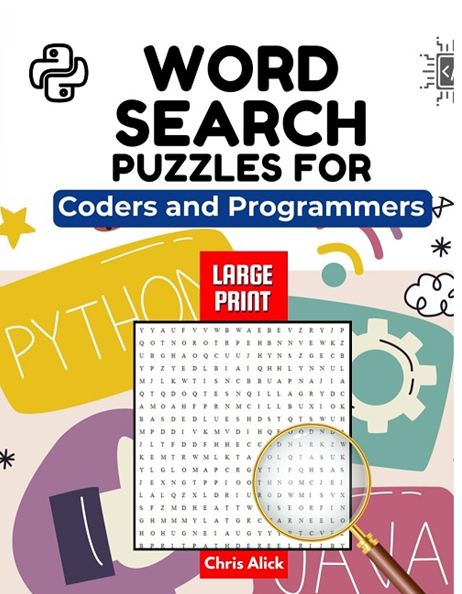
A strategic approach to this problem requires a solution that minimizes risk while maximizing perceived value. The ideal gift would operate within the typical budgetary constraints (usually under $20) while demonstrating a high degree of understanding of the recipient. It must be something that is not on a specific wish list but is still deeply appreciated. This brings us to an interesting product: the analog, single-purpose puzzle book in a world dominated by digital, multi-purpose devices. Specifically, “Word Search Puzzles for Coders And Programmers” by Chris Alick represents a uniquely strategic move in the Secret Santa game. Its value is not just in the product itself, but in how it leverages the underlying dynamics of the software engineering profession and the aggregated power of Amazon’s platform.
Aggregation Theory and the Secret Santa Problem
To understand the strategic value of this gift, it’s useful to apply the principles of Aggregation Theory. Amazon has aggregated consumer demand and commoditized the distribution of physical goods. The platform provides three critical components that make a purchase like this possible and advantageous:
- Zero Distribution Costs: For the consumer, access to a near-infinite catalog of goods is instant and free.
- Zero Transaction Costs: A Prime membership and stored payment information reduce the friction of purchasing to a single click.
- Discovery and Trust: Amazon’s review system serves as a powerful discovery engine, aggregating user experience and creating a trusted feedback loop.
This platform solves the logistical problems of gift-giving. However, the core problem of what to give remains. The brilliance of Alick’s puzzle book is that it is a product perfectly modularized to fit into this ecosystem, while also solving the user-specific problem of finding a thoughtful gift for a niche audience.
The book’s low price point (under $10) places it well below the typical Secret Santa budget ceiling, creating an immediate surplus of value for the giver. For the receiver, the gift’s value is derived from its high degree of personalization, which feels disproportionate to its low cost. This is the essence of a successful strategic play in this context: a low-risk, low-cost action that generates high perceived value.
The Job-to-be-Done: Active Decompression
A software engineer’s primary function involves intense, focused cognitive work. The “job” is to solve complex logical problems within abstract systems. A common misconception is that the antidote to this work is passive relaxation. However, a mind conditioned for problem-solving does not simply power down. This is where we must consider the “job” that a gift can be “hired” to do.
The job-to-be-done for a programmer at the end of the day is not just to relax, but to decompress. This is an active process of winding down the brain’s problem-solving engine. Chris Alick has done a perfect job designing a product that serves this exact job. The puzzle book leverages the same pattern-recognition skills used for debugging code but applies them to a zero-stakes environment.
Finding “monorepo” or “idempotent” in a grid of letters provides a small, satisfying intellectual reward, a dopamine hit, without any of the associated stress of a production issue or a looming deadline. It is a form of structured, active recovery. This is fundamentally different from a generic puzzle book. The content is the differentiator; it creates a direct and immediate connection with the user’s professional identity, making the activity feel both relevant and validating.
The book’s design demonstrates a deep understanding of its target user:
- High-Value Content: The book contains over 60 themed puzzles covering a comprehensive range of topics, from foundational concepts like Object-Oriented Programming (OOP) and Algorithms to modern tools like Python and Kubernetes. This is not a superficial collection of buzzwords; it is a well-curated map of the software development landscape.
- User-Centric Design: The large 8.5″ x 11″ format and clean grids provide a comfortable visual experience, a welcome contrast to a day spent staring at a high-resolution monitor. The inclusion of an answer key is another key strategic decision, as it prevents the activity from becoming a source of frustration, thereby ensuring it continues to fulfill its primary job of stress-free decompression.
The Amazon Ecosystem as a Feature
The product itself is well-positioned, but its integration with Amazon’s ecosystem is what makes it a truly dominant solution for a Secret Santa scenario. The platform’s features are not just conveniences; they are integral components of the gift’s overall value proposition.
Convenience and Fast Delivery
In a corporate environment, time is a scarce resource. The need for a Secret Santa gift often becomes an urgent, last-minute task. Amazon’s core competency in logistics solves this problem completely. The ability to order a gift with Prime shipping and have it arrive in one or two days is a massive competitive advantage. It removes the need to physically go to a store and search for a suboptimal alternative. This transforms the gift-giving process from a high-friction, time-consuming chore into a low-friction, efficient transaction.
Secure Transactions and Trust
The digital economy runs on trust. Amazon has invested decades in building a secure and reliable transaction platform. For the consumer, this means the ability to make a purchase with a single click, confident that their financial information is protected. This removes another point of friction and allows the user to focus on the decision of what to buy, not the process of how to buy it.
This entire ecosystem creates a powerful flywheel. The high quality and low price of the product lead to positive reviews. The aggregated reviews create trust and drive discovery. The ease of purchase and fast delivery convert intent into action with minimal friction. Alick’s puzzle book is perfectly situated to benefit from every stage of this flywheel.
Conclusion: The Winning Strategy
“Word Search Puzzles for Coders And Programmers” is more than just a clever gift. It is a strategically sound product that effectively solves the core problems of the office Secret Santa exchange.
- For the Giver: It is a low-cost, low-risk purchase that carries a high perceived value of thoughtfulness and personalization. The Amazon platform removes all logistical friction, making it an efficient and intelligent choice, especially under a time constraint.
- For the Receiver: The gift performs a valuable job: providing a tool for active mental decompression that is directly relevant to their professional identity. Its high-quality design and authentic content make it a genuinely useful and appreciated item, not another piece of corporate detritus.
The intersection of a well-designed, purpose-built product with the power of a dominant distribution and discovery platform creates an outcome that is far greater than the sum of its parts. Chris Alick has created a product that perfectly understands its user and Amazon provides the ecosystem that allows it to win the market. For anyone tasked with buying a Secret Santa gift for a software engineer, this puzzle book is not just a good choice; it is the correct one.
Meta Information
Meta Title: A Strategic Secret Santa Gift for Software Engineers
Meta Description: Discover why this puzzle book is the perfect, low-cost Secret Santa gift for software engineers, leveraging strategic design and Amazon’s platform.
